MYP Individuals & Societies • Year 10 • Unit 1
Oceans — The Big Blue
A balance between human and ocean systems is essential for a sustainable future.
Systems
Original AdornGeo sequence
Unit learning
Dipping In — getting to know the ocean
Ocean Odyssey
Key Terminology
Geographical Skills — patterns and trends
Are There Plenty of Fish in the Sea?
Chasing Coral
The Heat is On
Exploring Contemporary Ocean Issues
Research Question Formulation
Researching
Research Essay Assessment
Essay Structure
Dipping In: Ocean Odyssey & Key Terminology
Begin with scale, wonder and location. Students complete the Ocean Odyssey, annotate a world map and build the key vocabulary needed for the contemporary human and environmental issues that follow.
The Ocean Speaks
Keep this short film as an opening provocation. Students listen to the ocean's first-person message, identify the claims it makes about human dependence and responsibility, then return to those claims as the unit develops.
Nature Is Speaking — Harrison Ford is The Ocean
Reading Ocean Evidence: Patterns, Trends & Anomalies
Teach the analytical language students will use throughout the unit. Students distinguish spatial patterns from trends over time, quantify evidence, identify anomalies and move from state to describe to explain using fisheries, coral bleaching, shipping, sea-temperature and South China Sea examples.
Ocean evidence skills stimulus
Are There Plenty of Fish in the Sea?
Treat fish as a renewable resource only when harvesting remains within the stock's reproductive capacity. Students interpret global evidence, identify the drivers and consequences of overfishing, then compare quotas, marine protected areas and aquaculture as possible responses.
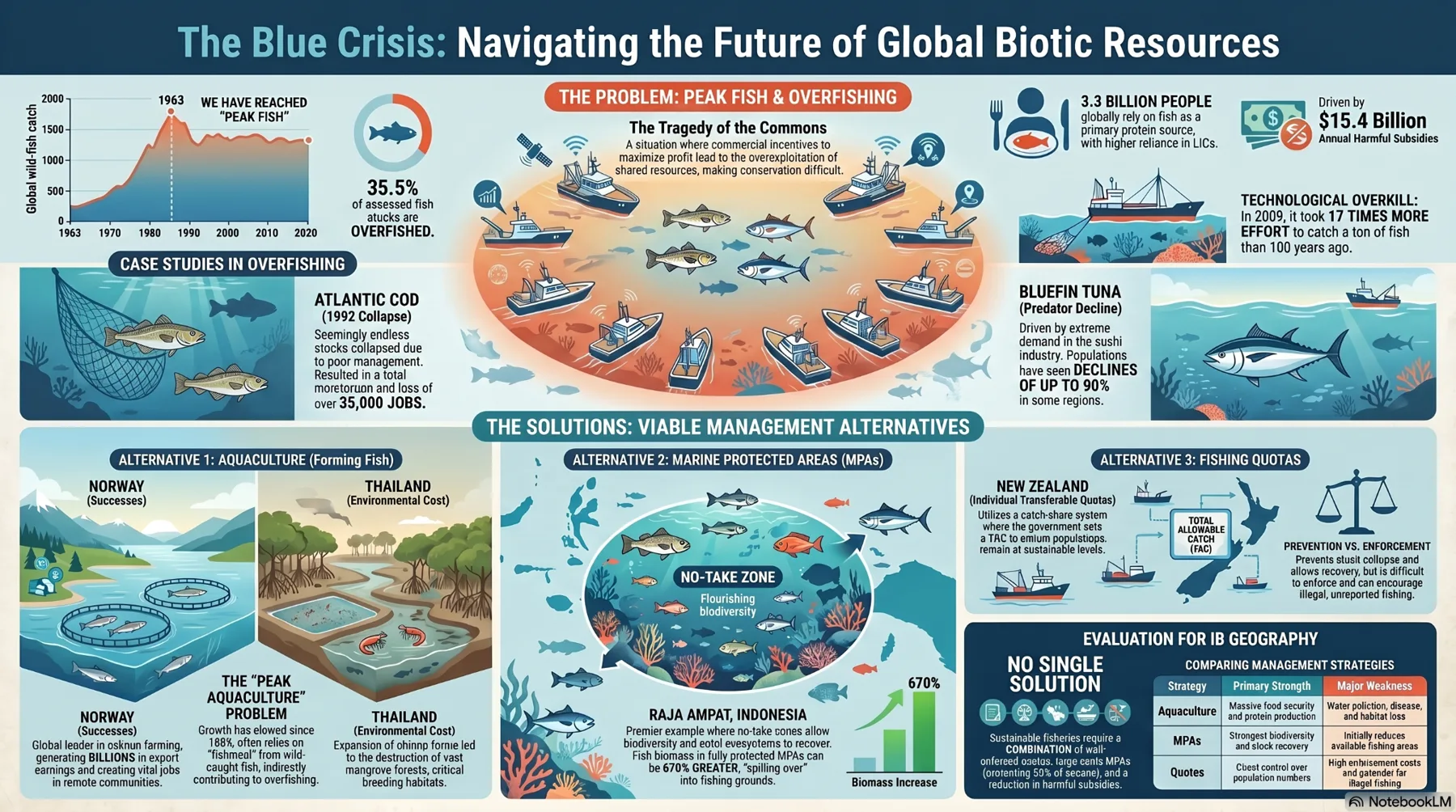
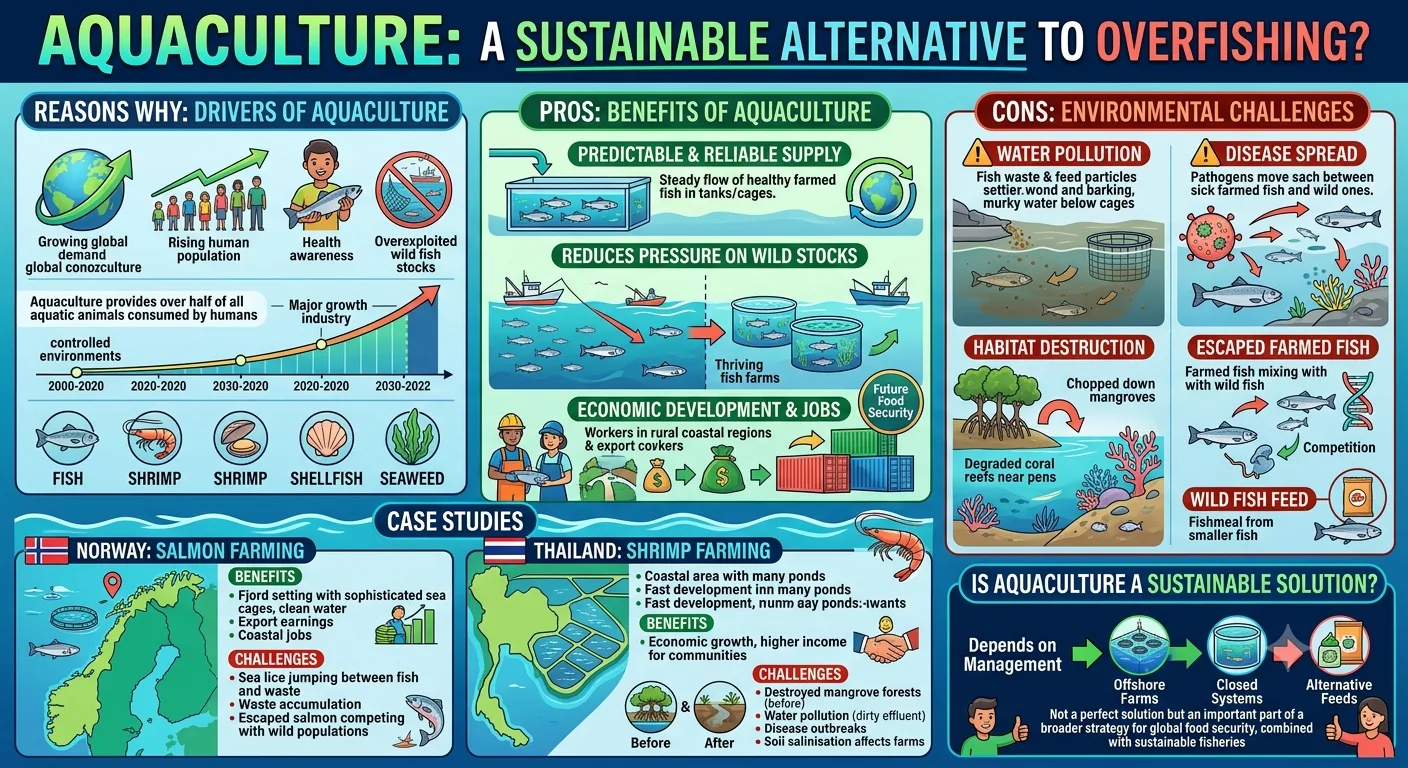
Watch: Biotic resource use and overfishing
Chasing Coral & The Heat is On
Use coral reefs as a visible indicator of ocean stress. First establish what coral is, where reefs occur, the conditions they need and the ecosystem services they provide. Then connect greenhouse-gas emissions to ocean warming, marine heatwaves and bleaching through Chasing Coral and The Heat is On.
Chasing Coral — official trailer
Exploring Contemporary Ocean Issues
Students choose a current ocean issue, locate it, identify the people and systems involved, and separate evidence from opinion. The recovered exploration document and original OMG magazine provide the bridge from class processes to contemporary geographical evidence.
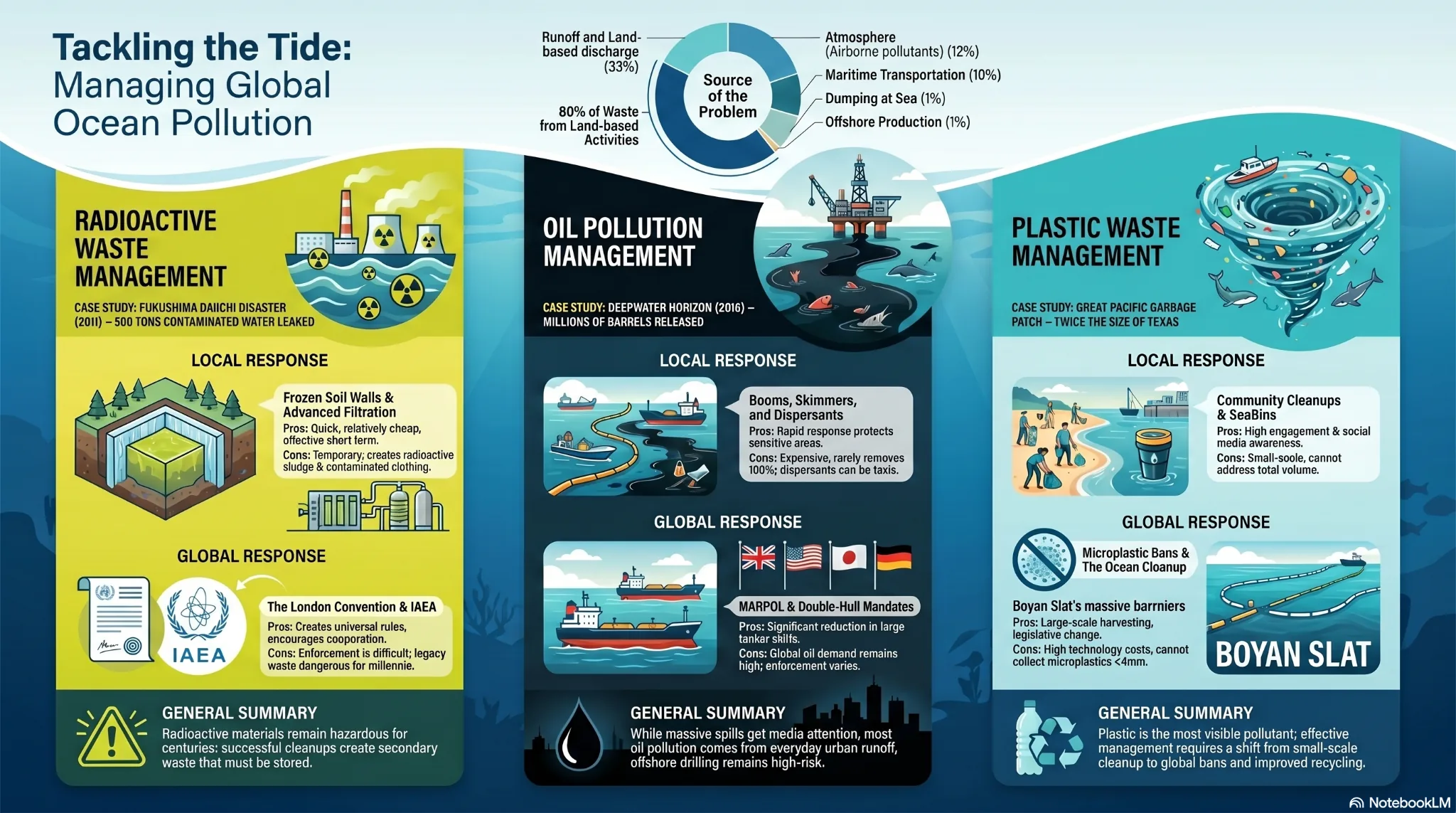
From Research Question to Research Essay
Turn a broad interest into a focused geographical investigation. Students formulate a debatable question with a clear place, process and scale; collect reliable evidence; record sources; organise claims and counterclaims; and build a conclusion that answers the question rather than repeating the introduction.